Planting & Pruning Guide
Planting:
Plant at least 45cm away from a structured wall, the canes fanned out and tied onto a support.
Bare Root Roses: Untie any string and soak in a bucket of water for several hours. Dig a hole large enough to accommodate the roots without cramping (prune lightly if necessary). Mix a handful of bonemeal/ rose fertilizer with the excavated soil. Spread out the roots in the hole and gradually replace the soil, firming well, so the union (where the roots meet the shoots) is 3-4cm below soil level. Water well.
Container Roses: Plant out from June to February (do not remove from container during the spring). Ensure compost is moist and the rose is well rooted in the pot before planting. Prepare a hole 45cm deep x 45cm wide, adding well-rotted organic matter and a handful of bonemeal/ rose fertilizer to the soil. Remove the pot and tease out outer roots. Place root ball in hole and replace soil, firming well so the union is just below soil level. Water generously.
Planting in a pot: For compact shrubs only – avoid planting vigorous shrubs and climbers in pots. Use a tall container, at least 45cm deep. Pot-up with a soil-based compost (eg. John Innes No.3) and mix in a handful of bonemeal/ rose fertilizer. Ensure the union is just below soil level, and the pot has plenty of compost. Water generously. Roses in pots require special attention to feeding and watering.
Pruning
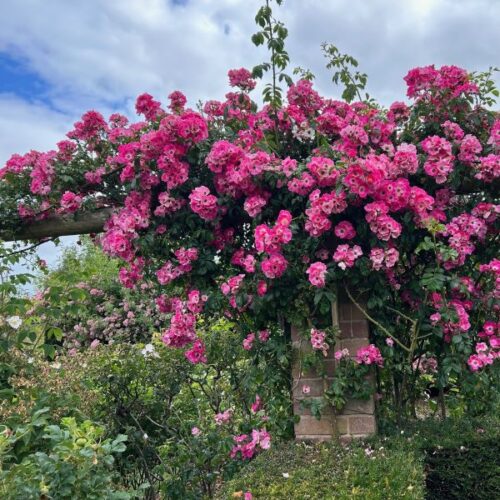
Produces flowers on old wood. Only prune once fully established or if they have outgrown their allotted space. Remove one or two of the oldest canes completely after flowering. Other growth can be tied in or cut back to keep the plant tidy.
For further information see our Planting and Pruning Guide page.